
Waves of wisdom Surf Safety
RNLI Surf Safety Talk
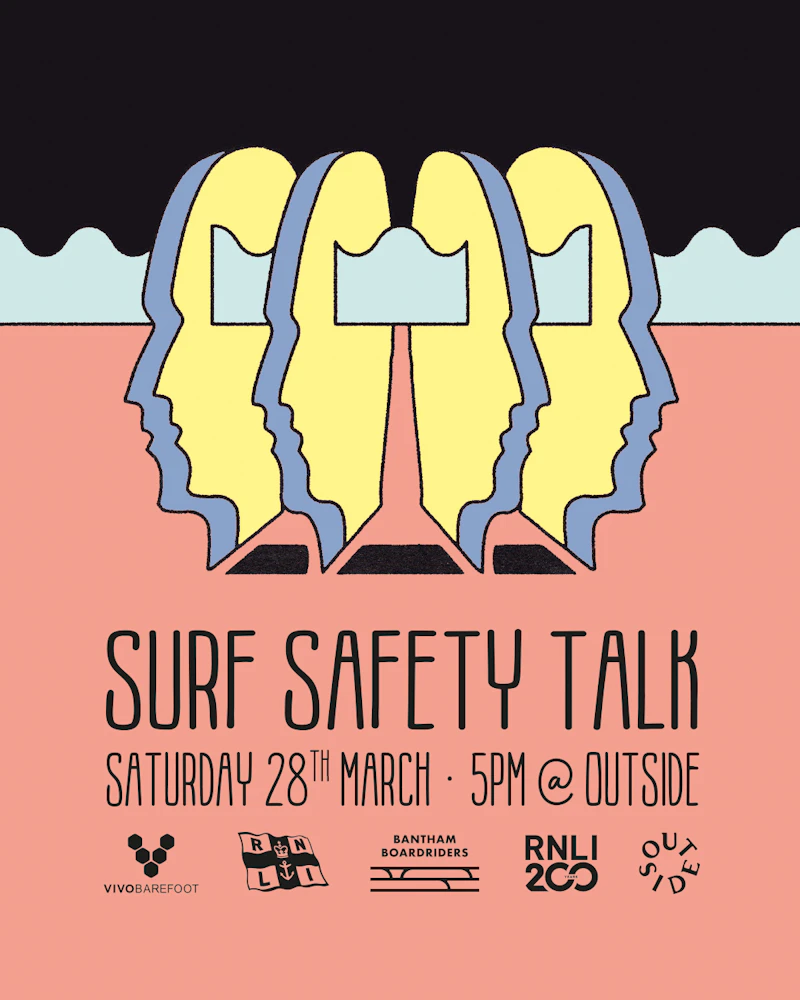
Surf Safety


RNLI lifeguards, surfers and their families gathered in Bantham on March 28th to take part in a Surf Safety afternoon dedicated to raising awareness of potential dangers in the water, helping others if in trouble and the importance of surf etiquette.
Organised by the Bantham Boardriders Surf Club and hosted at Outside in Bantham, the event welcomed senior lifeguards, Luke Lane Prokopiou, Matt Liptrott and Daisy Womack from the RNLI who offered invaluable advice on rescue techniques, rip currents and risk assessment. The team also brought along some mannequins to demonstrate CPR techniques, allowing participants to get some hands-on experience.
Luke said, “Surfers generally have a good awareness of water safety, but they can still get into difficulty, particularly in big swell, or notice a less experienced surfer who needs support. Often, incidents can be prevented simply by sharing local knowledge, highlighting hazards, and offering early advice. Where lifeguards are on patrol, people should always alert them rather than putting themselves at risk. Outside the patrol season, understanding the risks, knowing who to contact in an emergency, and having basic first‐aid knowledge can make a real difference.”
The session was followed by a Question Time style panel discussion on the dos and don’ts of surfing behaviour, the unwritten rules of the waves and respecting fellow water users. An expert panel including; 14 year old local short-boarder Tommie Hamilton, senior Instructor Jess Harvey from Discovery Surf School, local long time surfer Margaret Harding, Senior RNLI Lifeguard Matt Liptrott and Bantham Boardriders safeguarding lead, Gary Sinclair led an informative discussion on the challenges of the increasing number of water craft in the sea.
The last few decades has seen a surge in popularity not just in surfing but in stand- up paddle surfing, kite surfing, foiling on various types of boards, winging and kyacking.
Chairman of the Bantham Boardriders Club, Paul Hatton said, ‘While it’s great to see so many people getting into surfing, the water is becoming ever more busy with all types of wave craft. It’s very easy now to just hire boards and suits and get in the water but if there is little or no awareness of surfing etiquette, this can lead to accidents.
Paul continued, ‘Experienced surfers have generally had it drilled into them from an early age about where to sit, not to drop in, where to paddle out and so on but very often, particularly when it’s busy, rules are ignored. We feel it’s important to keep talking about etiquette in the water and it’s essential for new surfers to learn so they can keep themselves safe and not pose a danger to others.’
Surfing Code of Conduct:
. Right of Way. The surfer closest to the breaking part of the wave (the “peak”) has priority. If someone is already riding the wave, don’t drop in.
. Don’t Drop In. “Dropping in” is taking off on a wave in front of someone already riding it. If you accidentally drop in, pull off immediately and apologise.
. Paddle Wide, not through the wave. When paddling back out, avoid the path of someone riding a wave. Paddle around the breaking waves, not straight through the lineup.
. Don’t Snake. “Snaking” is paddling around someone to steal priority. Even if you get closer to the peak, it’s considered bad form.
. Hold Onto Your Board. Always keep control of your board especially in crowded conditions. Letting go can seriously injure others.
. Respect the Lineup. Wait your turn. Don’t paddle straight to the front and start taking waves. Observe how others are rotating waves and fit into that rhythm.
. Communicate / Call “left” or “right” if needed when taking off. Make eye contact or signal intentions to avoid confusion.
. Don’t Hog Waves. Share the waves—especially in small or crowded conditions. Give others a chance rather than taking every set.
. Know Your Ability Level. Don’t surf waves that are too advanced for you. Beginners should stay away from crowded, high-performance spots.
. Respect Locals. At many breaks, locals surf there regularly. Be polite, don’t act entitled, and show respect—it goes a long way.
. Help Others When Needed. If someone loses their board or is struggling, check if they’re okay.
The Bantham Boardriders Club is a not for profit club, run by volunteers and dedicated to all that is surf on this stretch of coast. Please go to www.banthamboardriders.uk for more information on membership, competitions, events and socials.
Outside is multi use community space with a cafe, skatebowl, pottery studio and outdoor growing space located at the top of the Bantham Road https://outside- devon.com
For more information on Beach Safety, go to www.rnli.org/safety/beach-safety